Why We Can't Stop Testing Our Names
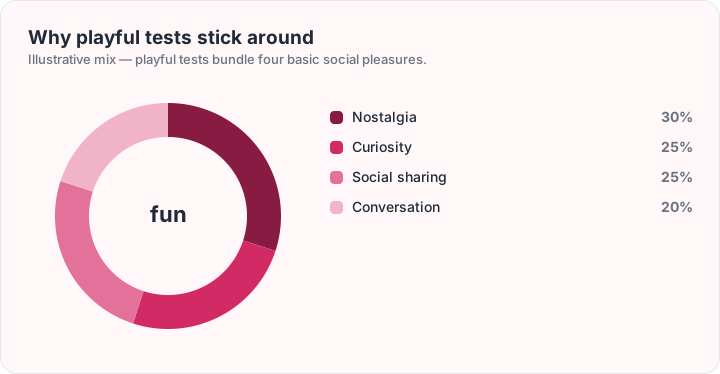
Verdict first: love calculators survived the death of dial-up, Flash and three generations of social networks because they package four things human brains never stop wanting: a curiosity gap, a personal verdict, a shared ritual, and a punchline. Understand those four and you understand why the genre refuses to die.
The curiosity gap, personalized
Any slot machine works because the next pull might pay. A name calculator is a slot machine where the coin is your own name — the input you are maximally curious about. "What will it say about us?" is an irresistible question precisely because the answer claims to be about you, and because it arrives in under a second. The gap between asking and finding out is nearly zero, which is exactly how long modern patience is.
The Barnum effect does the heavy lifting
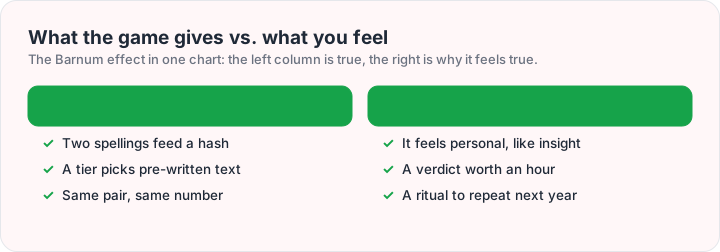
Psychologists call it the Barnum effect: vague, generally flattering statements read as personally accurate. "You have a great need for others to like you" describes everyone, so it lands with everyone. Love calculator tiers do the same — every band comes with a story that could plausibly describe any couple in that band, and our brains fill in the specifics. The score feels seen because you did the seeing.
A ritual two people can share
Tarot has spreads; astrology has charts; the love test has two text boxes. The genius is the minimalism: one shared, repeatable ritual that costs nothing and takes seconds. Couples have anniversary rituals; friend groups have bracket tournaments; classrooms have icebreakers — all running on the same two boxes. Rituals survive because they mark occasions, and this one marks them with a number.
The punchline is built in
Finally, the genre is self-aware. Nobody believes a percentage; the entertainment is in the theater of taking it seriously for one second. A 12% score for a devoted couple is funnier than a 96% precisely because the algorithm is so confidently wrong — it gives two people something to laugh about and gently rebel against. That's a healthier deal than most fortune-telling offers.
So the formula for the genre's longevity reads: personalize the question, deliver a verdict, make it shareable, and keep it funny. Every rebuild of the classic — including this one — is really just a fresh coat of paint on those four planks.