The Valentine's Day Love Test Playbook
Verdict first: the love test is the cheapest Valentine's entertainment ever invented — free, instant, works on any phone, and funny with zero setup. These four formats are field-tested by classrooms, parties and long-distance couples; pick the one that matches your February 14th.
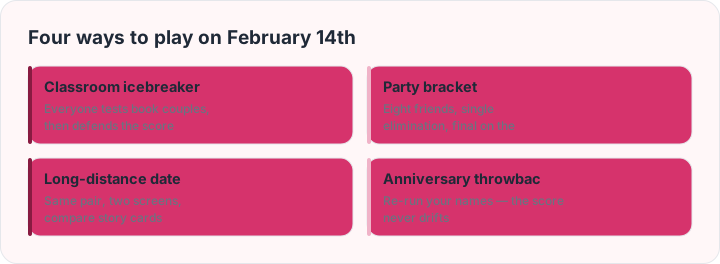
Format 1: the classroom icebreaker
Every student tests a fictional or historical couple — book characters, scientists, rival football clubs — then has sixty seconds to defend the score against the plot. Romeo & Juliet scoring lower than a royal couple that lasted 73 years is the teachable moment: the algorithm reads letters, not love. It's critical thinking wearing a party hat, and it needs no preparation whatsoever.
Format 2: the party bracket
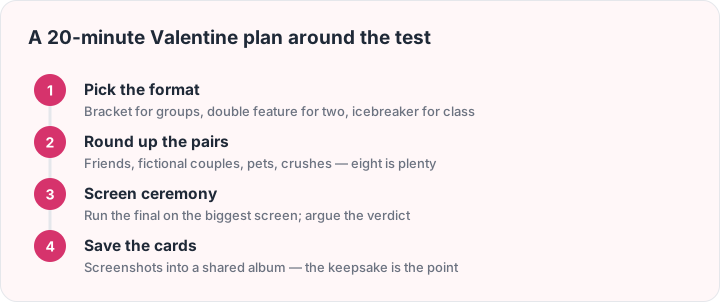
Eight guests, eight pairs (themselves, their pets, their celebrity crushes), single elimination on one shared screen. The crowd argues each verdict; the final runs on the TV with full ceremony. The share cards double as party favors. House rules recommend against letting the newest couple face elimination before round two.
Format 3: the long-distance double feature
Both of you open the same result permalink at the same time on a video call — same names, same score, guaranteed, because the engine is deterministic. Compare tier stories, argue about whether the algorithm was fair, then screenshot both cards into the shared album. It's a five-minute date activity that feels like a keepsake by the end.
Format 4: the anniversary throwback
Couples who tested years ago can re-run the exact same names and get the exact same score — the algorithm never revises its opinions. Some re-test annually as a ritual; the number's permanence is the charm. New this year: send the card with "still holding up my end of the modulo."
Whatever the format, one ground rule keeps it fun: the score hands out jokes, not verdicts. February 14th is for the people, not the modulo.
A note on timing
Love-test traffic spikes every February for obvious reasons, and the site holds up: everything runs in the browser, there is no queue, no signup wall and no limit on how many pairs you test. If you are planning the bracket for a party, do a dry run the night before — pick your eight pairs, check they all produce numbers you can argue about, and bookmark the result links. On the night itself, the whole tournament takes under fifteen minutes, which leaves plenty of February for the chocolate.