What to Do After the Love Test
Verdict first: the love test's real product isn't the score — it's the message you send afterward. The card is a pre-written icebreaker with your names on it; played right, a silly percentage lowers the stakes of an actual conversation. Here's how to play each outcome.
If the score is high (70+)
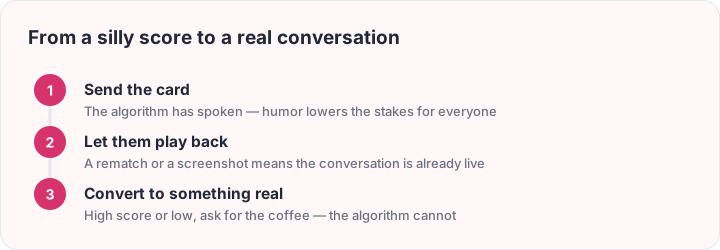
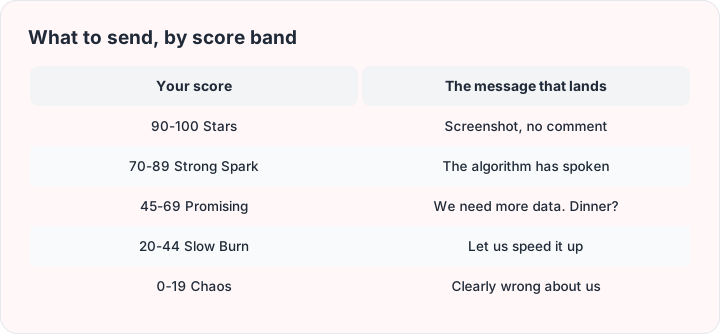
Send the card with minimal commentary: "the algorithm has spoken." The image does the work — names, score, verdict, your judgment implied but deniable. If they play back (their own score, a screenshot, a "rematch?"), you have a live conversation about "us" that they helped start. That's the moment to convert: skip the algorithm and ask for something real — coffee, a walk, the thing you've been circling.
If the score is mid (20–69)
The middle bands are where most pairs land, which makes them perfect for humor. "Promising — the algorithm says we need more data" is a date request wearing a lab coat. Mid scores also invite the nickname gambit: test alternate spellings, announce that the corrected data improves the forecast, and enjoy the most honest possible demonstration that these numbers are vibes.
If the score is Beautiful Chaos (0–19)
The tier copy blames a mango tree in Antarctica for a reason: low scores are jokes, not verdicts. "The algorithm is clearly wrong about us" is a bolder send than any high score — it signals confidence and shared irony at once. If they laugh, the calculator did its job; if they argue, better still. Chaos is an invitation.
The one rule that matters
Whatever the number, remember what it is: a deterministic hash of two spellings, same as a lucky jersey. The people who win at this game are the ones who treat the card as the opening line, not the last word. The algorithm can't ask them out — but it can make the asking easier, which, for a free browser tool, is a solid quarter's work.